Thursday, January 11, 2018

Wampanoag Tribe Confirms Plan to Build Gambling Hall after Supreme Court Decision

Casino News Daily
Wampanoag Tribe Confirms Plan to Build Gambling Hall after Supreme Court Decision

Representatives for the Wampanoag Tribe of Gay Head (Aquinnah) have confirmed their intention to build a bingo hall after the US Supreme Court refused to review a case against the tribe’s plan brought by the state of Massachusetts and the town of Aquinnah.

Talking with The Vineyard Gazette, tribal chairwoman Cheryl Andrews-Maltais said that they want to build a “modest” gaming facility with Class II gaming options. In other words, the tribal gaming venue will feature bingo machines only.

It also became clear that the bingo hall will not be located at the site of a community center on the Martha’s Vineyard island, as originally planned. While a site for the property is yet to be determined, it will still be located on tribal land and on Martha’s Vineyard.

Ms. Andrews-Maltais further revealed that the tribe also nurtures a long-term goal of being able to open a full-scale casino on the mainland. However, she pointed out that they will be slow and steady in their pursuit of that end.

The US Supreme Court denied review of the legal dispute between the tribe and Massachusetts this past Monday. The state and the town of Aquinnah have been opposing the tribe’s plan for the construction of the bingo hall for several years.

Opponents of the project claimed that it violated a 1987 law that prohibited the tribe to conduct gambling activities. A lower court sided with the state and the town, issuing a ruling that banned the project from moving forward. An appeals court ruled last summer in favor of the Wampanoag Tribe, pointing out that the 1987 law was superseded by the 1988 Indian Gaming Regulatory Act.

The case was thus brought to the Supreme Court. The decision of the nation’s highest court not to review the case means that the Court of Appeals’ ruling now stands as final, and the tribe can proceed with building its bingo hall.

The Town of Aquinnah’s Response

The Vineyard Gazette reported that Aquinnah town officials met Attorney Ronald H. Rappaport on Wednesday to discuss whether they will make more moves following the Supreme Court’s denial of certiorari. On behalf of the town and its officials, Mr. Rappaport then spoke to local media to congratulate the tribe and to reveal that they are not planning to file any lawsuits for the time being.

The attorney has been contacted by the tribe’s attorneys with a request for a dialogue, to which he and town officials have agreed. Mr. Rappaport expressed hopes that the dialogue will help all parties find common ground.

When asked if they knew where the Wampanoag Tribe is planning to build their bingo hall, town officials said that they did not have information about the preferred location of the facility yet.

The tribe previously intended to open the venue at the site of a community center it was building on Martha’s Vineyard. It completed the center last year and announced that it would keep its original purpose as community space.

The post Wampanoag Tribe Confirms Plan to Build Gambling Hall after Supreme Court Decision appeared first on Casino News Daily.
Share:

Aristocrat Technologies Incorporated completes social acquisition

World Casino News
Aristocrat Technologies Incorporated completes social acquisition

Less than three months after concluding its $500 million acquisition of Israeli firm Plarium Global Limited and Aristocrat Technologies Incorporated has now reportedly announced the completion of its $990 million all-cash takeover of fellow social online games developer Big Fish Games Incorporated. According to a report from the Brisbane Times newspaper, the most recent deal means that Las Vegas-based Aristocrat Technologies Incorporated, which is a subsidiary of Australian gaming machine innovator Aristocrat Leisure Limited, is now the world’s second largest provider of social online games behind Playtika. The newspaper reported that Seattle-headquartered Big Fish Games Incorporated, which has been owned by American casino operator Churchill Downs Incorporated since 2014, has developed a catalogue of almost 4,000 mobile and desktop games including its popular Gummy Drop!, Fairway Solitaire and Big Fish Casino titles. The firm, established in 2002, also purportedly has offices in Oakland, California and Luxembourg with its innovations enjoyed by in excess of 12.4 million players every month. In a brief statement to the Australian Securities Exchange, Trevor Croker, Chief Executive Officer for Aristocrat Technologies Incorporated, reportedly declared that the ‘strategic and financial benefits’ of acquiring Big Fish Games Incorporated were ‘highly compelling’. “Big Fish Games Incorporated’s digital-first social casino content and industry-leading meta-game capability and applications are highly complementary to [our] existing and industry-leading land-based digital content business,” reportedly read the statement from Croker. The Brisbane Times reported that Aristocrat Leisure Limited first revealed its intention to buy Big Fish Games Incorporated in November while the completion of the acquisition means that its digital business has now doubled in size to account for some 38% of all revenues. “Big Fish Games Incorporated will immediately provide scale across our entire digital platform and our social casino business will become the second largest social casino publisher globally,” reportedly read the statement from Croker.
Share:

Indiana Senate may soon consider sportsbetting legalization

World Casino News
Indiana Senate may soon consider sportsbetting legalization

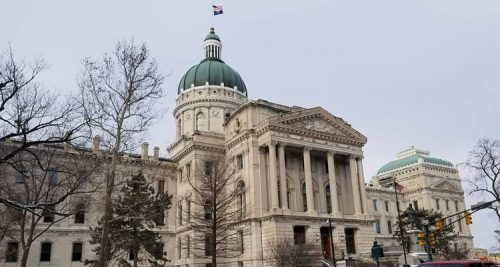
In Indiana, senior legislators will reportedly soon consider a measure that could see the Midwestern state become the latest to legalize sportsbetting at its many racinos and riverboat casinos. According to a report from The Indianapolis Star newspaper, the proposed measure known as Senate Bill 405 was introduced to the Indiana Senate by Republican legislator Jonathan Ford on Monday and would require operators to pay an initial licensing fee of $500,000 alongside an annual duty of $75,000. The newspaper reported that Ford’s proposal, which would also impose a 9.25% tax on all adjusted gross sportsbetting revenues, was immediately sent to the Indiana Senate’s Committee on Public Policy for review and could soon be put to a vote before the full Republican-controlled Indiana Senate. The Indianapolis Star explained that Ford’s proposed legislation follows the introduction of similar measures in at least ten other states and like its counterparts would ultimately require a favorable outcome to a case currently before the United States Supreme Court in order to be enacted. That action, Christie v NCAA, involves the state of New Jersey’s attempt to overturn’s 1992’s Professional and Amateur Sports Protection Act (PASPA), which introduced a nationwide ban on all sportsbetting with the notable exceptions of venues located in Oregon, Delaware, Montana and Nevada. The newspaper reported that Indiana was the second state behind Virginia to pass legislation for the regulation of real-money fantasy sports while detailing that Ford’s Senate Bill 405, which would not forbid wagering on collegiate sports, is soon set to be followed by an almost identical proposal for the Indiana House of Representatives courtesy of fellow Terre Haute resident Rep. Alan Morrison. Matt Bell, President and Chief Executive Officer for the Casino Association of Indiana, reportedly told The Indianapolis Star that the legalization of sportsbetting would not result in large amounts of extra tax revenues but would help casinos in the state to attract more-reluctant customers. “We have to be reasonable in the way we address sportsbetting and its taxation as well, both in terms of entry into the market and how we tax it as a state,” Bell reportedly told the newspaper. “Its benefit is that it will be driving customers to a property who wouldn't be there, who will spend incrementally in other ways. That's where the state will realize a benefit.”
Share:

Wednesday, January 10, 2018

PokerStars donates over $30K to Raising for Effective Giving

Casino City Times
PokerStars donates over $30K to Raising for Effective Giving
Seventeen players took part in a High Roller charity tournament during the PokerStars Caribbean Adventure.
Share:

Penn National Gaming submits winning bid for PA’s first “mini-casino”

World Casino News
Penn National Gaming submits winning bid for PA’s first “mini-casino”

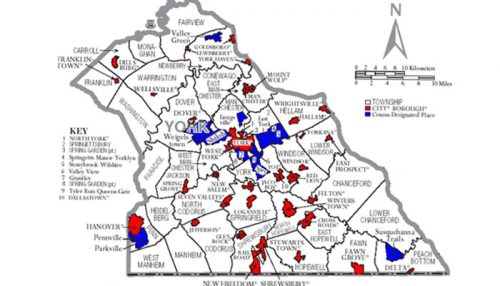
Yoe, a borough in York County, has been chosen as the location for Pennsylvania’s first mini-casino after the operator of Grantville’s Hollywood Casino won the rights to open one of 10 new satellite casinos courtesy of a $50.1 million bid and Governor Tom Wolf’s October approval of a far-reaching revenue package that included expanded gambling in the state. The Pittsburgh Post-Gazette reports that on Wednesday morning, Mountainview Thoroughbred Racing Association LLC, the operator of Hollywood Casino in East Hanover Township Dauphin County, and subsidiary of Penn National Gaming, submitted the winning bid via auction conducted through secret ballot in Harrisburg. According to the York Daily Record, the fact that Yoe was chosen does not mean that a satellite casino will be built there. What it does mean is that the developer has been approved to locate a site within 15 miles of the 136 square-acre borough, which is situated approximately seven miles from the city of York. Yoe was reportedly one of the 42 municipalities, more than half in York County, which opted out of the siting process for new casinos, so the satellite casino won’t be placed there. However, 27 municipalities in southern York County, including York City, did not, as reported by the York Daily Record. According to Kevin Schreiber, president and CEO of the York County Economic Alliance, by using Yoe as a center point, Penn National has a lot of options, with the 15-mile radius including the York metro area as well southern York County. According to the Pittsburgh Post-Gazette, at the auction, a bid for the mini-casino was made by four of the 11 eligible casinos. It was the first of 10 auctions reportedly scheduled over the next five months. Nine other public auctions will be held, with each of them scheduled between Jan. 24 and May 16 announcing one winner. The small borough, which was estimated in 2016 to have a population of 1,010, is outside the 25-mile safe zone of Hollywood Casino. No other casinos are permitted to place a satellite there. Penn National senior VP of public affairs, Eric Schippers, said, “We were really looking at this from one eye on defense, one eye on offense,” according to Philly.com. Schippers explained, “In terms of defense, we looked at: were a competitor to come into that area, it would have caused significant cannibalization of our business. In terms of offense, we looked at where could we drive incremental value for our shareholders.” In an attempt to prevent construction of the new casinos, a federal lawsuit was filed on Tuesday by Mountainview Thoroughbred Racing Association claiming that the gambling expansion law signed by Gov. Wolf on October 30, 2017, leaves the Grantville business uniquely vulnerable to its customers being poached by the new “mini-casinos,” more so than all of the other casinos in the state. The lawsuit states, “Though the 25-mile buffer zones purport to treat all existing casinos equally, as applied, Hollywood Casino, uniquely situated in the middle of the state, is the only casino likely to face significant cannibalization,” according to Philly.com. Penn National argues that the sole 25-mile buffer is not sufficient to protect Hollywood because the casino is alone and situated in the middle of the state, unlike other casinos which are already are close to competitors. Those casinos, the lawsuit argues, forms what it calls “mega-clusters” that form a super buffer of sorts and increase the exclusion zones around them. The lawsuit claims that if gamblers frequent new facilities, Hollywood would lose $34 million annually, causing financial harm that is “significant and unique.” Sands Casino Resort Bethlehem has also filed a lawsuit challenging the state’s two-month-old gaming law. The new Category 4 licenses allow between 300 and 750 slots and as many as 30 gaming tables in the first year of operation, with an option to add 10 table games the second year. According to the York Daily Record, Penn National Gaming has two business days to pay its winning bid of $50.1 million to the state. The company then has six months to submit a formal application notifying the Pennsylvania Gaming Control Board of the exact location of the satellite casino, unless an extension is granted by the state.
Share:

Finnish researchers to study anti-addiction nasal spray pilot

World Casino News
Finnish researchers to study anti-addiction nasal spray pilot

Next week is reportedly set to see researchers in Finland begin a unique year-long trial to test the effectiveness of a special nasal spray that has been designed to combat problem gambling. According to a recent report from The Guardian newspaper, the innovative spray is to contain a medication known as naloxone, which blocks the production of the pleasure-inducing chemical dopamine and is usually given to those suffering from an addiction to opiates such as morphine, opium and heroin. The newspaper reported that Hannu Alho from the Helsinki-based National Institute for Health and Welfare is set to lead the research, which is to involve approximately 130 volunteers testing out the spray whenever they feel the need to gamble. The addiction medicine professor purportedly described the study as ‘the first of its kind globally to use nasal spray’ before stating that his solution is expected to work faster than a previous attempt that involved gambling addicts taking a pill that contained a substance akin to naloxone. “The spray goes to the brain in a few minutes so it’s very useful for a gambler; if you crave gambling, just take the spray,” Alho reportedly told The Guardian. The newspaper reported that a study from the Peluuri anti-addiction organization had recently determined that around 2.7% of Finnish adults suffer from some form of gambling problem while the United Kingdom’s Gambling Commission purportedly determined last year that some two million Britons were either at risk or already addicted. “Gambling is a very impulsive behavior [and] the need to gamble starts right away,” Alho reportedly told The Guardian. “For this reason we are seeking a medication with a quick effect; the nasal spray acts in just a few minutes.”
Share:

Steve O’Dwyer Wins 2018 PCA $50,000 High Roller Single Re-Entry

Casino News Daily
Steve O’Dwyer Wins 2018 PCA $50,000 High Roller Single Re-Entry

Steve O’Dwyer is among those poker players whose name rings a bell in the mind of every self-respecting fan of the game. The player cemented his excellent reputation in the world of poker last night when he topped the field of the PCA $50,000 High Roller Single Re-Entry. The player added $769,500 to his poker bankroll and now boasts over $21.1 million in career tournament earnings.

O’Dwyer made his way to the title by outlasting a field of 46 entries, including 15 re-entries. The player finally played heads-up against another prominent poker pro, Byron Kaverman. While both players boast lengthy lists of poker accomplishments, Kaverman was vying for his first high roller title from a PCA high roller tournament. As for O’Dwyer, he had two such titles prior to last night.

In 2016, the player took down a $50,000 buy-in eight-handed high roller for the total amount of $945,495. And he captured the $100,000 Super High Roller title in 2015, collecting a payout of $1,872,580 for his efforts.

The first day of the $50,000 high roller O’Dwyer won last night was completed with the field being reduced to just six survivors. They were led by Kaverman who bagged and tagged 1.509 million on Monday night. O’Dwyer finished third in chips that evening.

The first several stages of action on Day 2 of the event were marked by Kaverman’s successful bid to maintain the chip lead. However, the player eventually lost control and let other players accumulate quite some stacks, as well.

Still, heads-up began with Kaverman holding a little more chips than his final opponent. He quickly extended that advantage after successfully picking off O’Dwyer’s attempt to bluff during an early hand.

Heads-Up Action and More about the Tournament

O’Dwyer apparently knew what to do to turn odds in his favor and stop his opponent’s growing momentum. The player quickly evened his and Kaverman’s stacks, and then quickly began building his advantage.

At one point, Kaverman had the chance to improve considerably and probably turn the course of events. However, even though he had a nice hand, he decided not to risk it all in an all-in challenge by O’Dwyer. Little did Kaverman know that his opponent was actually pulling off a perfect bluff.

O’Dwyer then needed only several hands to claim the title and send Kaverman to the rail in second place. Short-stacked Kaverman’s queen-nine clashed against O’Dwyer’s jack-ten and lost. The player thus left as the tournament as the runner-up, collecting $531,860 from the payout desk.

As mentioned above, the $50,000 tournament attracted 46 entries, most of whom seasoned high rollers. They created a prize pool of $2,263,200, which was distributed to the top finishers. Aside from O’Dwyer and Kaverman, these six lucky players also included France’s Jean-Noel Thorel ($339,480), Erik Seidel, the well-known poker pro ($260,260), Benjamin Pollak, the other Frenchman at the final table ($203,680), and Orpen Kisacikoglu ($158,420) from Turkey.

The post Steve O’Dwyer Wins 2018 PCA $50,000 High Roller Single Re-Entry appeared first on Casino News Daily.
Share:

Blog Archive

Blog Archive